
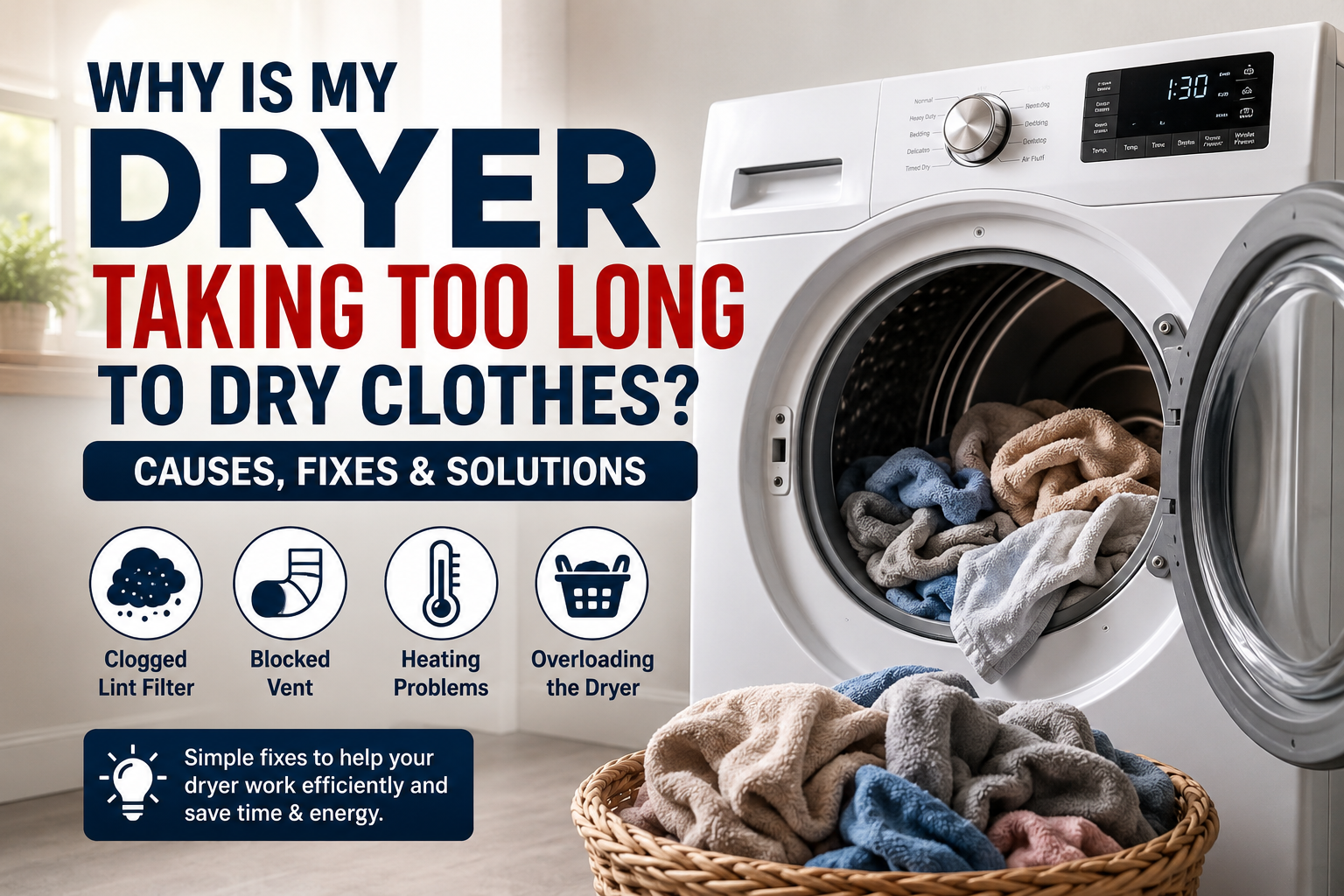
Why Is My Dryer Taking Too Long to Dry Clothes? Causes, Fixes & Solutions
A dryer is supposed to make life easier by quickly drying clothes, but when it starts taking too long, it becomes frustrating and costly. Longer drying time means higher electricity bills, more wear on clothes, and unnecessary stress on the machine. The good news is that this problem is usually caused by common issues that can be fixed easily once identified. In this guide, we will explain the main reasons why your dryer is taking too long to dry clothes and how you can fix them step by step.
1. Clogged Lint Filter Reducing Airflow
One of the most common reasons for slow drying is a clogged lint filter. Every time you use your dryer, lint from clothes collects in the filter. If it is not cleaned regularly, airflow becomes restricted.
Why it matters
Dryers need proper airflow to remove moisture from clothes. When airflow is blocked, hot air cannot circulate properly, and clothes stay damp for longer.
Solution
Clean the lint filter after every load. Simply remove the filter, take off the lint by hand, and rinse it with water once a week to remove residue buildup from fabric softeners.
2. Blocked Dryer Vent or Exhaust Hose
Even if your lint filter is clean, the dryer vent outside your home may be blocked. Lint can build up inside the vent hose over time, especially if it has never been cleaned.
Signs of a blocked vent
- Clothes take multiple cycles to dry
- Dryer feels very hot
- Weak airflow from outside vent
Solution
Disconnect the vent hose and clean it thoroughly. If the blockage is deep, professional cleaning may be required. This is one of the most important maintenance steps to keep your dryer working efficiently.
3. Overloading the Dryer
Many people try to save time by putting too many clothes in one cycle, but this actually causes the opposite effect.
Why overloading is a problem
When the drum is too full, clothes cannot move freely. Hot air cannot reach all fabrics evenly, resulting in damp clothes even after long cycles.
Solution
Always load your dryer halfway or up to 75% of its capacity. This allows proper tumbling and airflow, helping clothes dry faster.
4. Wet Clothes Going in Too Heavy
If clothes are not properly spun in the washing machine, they will go into the dryer too wet. This increases drying time significantly.
Common causes
- Low spin speed setting in washer
- Faulty washing machine spin cycle
- Overloaded washer
Solution
Make sure your washing machine is spinning clothes properly before transferring them to the dryer. You can also run an extra spin cycle if clothes feel too wet.
5. Faulty Heating Element
If your dryer is running but not producing enough heat, the heating element may be failing.
Signs of a heating issue
- Dryer runs but clothes stay cold or slightly warm
- Multiple cycles needed for drying
- No strong heat inside drum
Solution
A faulty heating element usually needs replacement. This is a technical repair that may require professional service from experts like S&S Appliances LLC to ensure safe and proper fixing.
6. Moisture Sensor Problems
Modern dryers use moisture sensors to detect when clothes are dry. If these sensors become dirty or malfunction, the dryer may stop too early or run too long.
Why this happens
Fabric softener residue or lint can cover the sensors, causing incorrect readings.
Solution
Clean the sensors inside the drum using a soft cloth and rubbing alcohol. If the problem continues, the sensor may need replacement.
7. Improper Dryer Settings
Sometimes the issue is not mechanical but simply incorrect settings.
Common mistakes
- Using “eco mode” for heavy loads
- Selecting low heat for thick fabrics
- Choosing timed dry instead of sensor dry
Solution
Match settings to fabric type. Use higher heat for towels and jeans, and sensor-based drying for mixed loads.
8. Old or Worn-Out Dryer Parts
If your dryer is older, internal parts like belts, motors, or fans may wear out over time. This reduces efficiency and increases drying time.
Signs of aging dryer
- Loud noises during operation
- Weak drum movement
- Longer drying cycles than before
Solution
Regular maintenance can extend lifespan, but if multiple parts are failing, replacing the appliance may be more cost-effective than repeated repairs.
9. Poor Room Ventilation
Dryers also depend on proper airflow in the laundry area. If your laundry room is too small or closed, heat can build up and slow down the drying process.
Solution
Ensure proper ventilation in the laundry space. Keep doors slightly open or use exhaust fans if needed.
10. Electrical Issues or Low Power Supply
In some cases, dryers do not get enough power due to faulty wiring or electrical issues.
Signs
- Dryer heats inconsistently
- Cycle takes longer than usual
- Breaker trips occasionally
Solution
This requires inspection by a qualified technician to ensure safe operation.
Final Words
A dryer taking too long to dry clothes is a common issue, but in most cases, it is caused by simple problems like clogged vents, overloaded loads, or dirty filters. Regular maintenance can significantly improve performance and reduce energy bills.
However, if your dryer continues to perform poorly even after basic troubleshooting, it may be time for a professional inspection or replacement. Trusted local experts like S&S Appliances LLC can help diagnose the issue and provide reliable repair or replacement solutions.
Keeping your dryer in good condition not only saves time but also extends its lifespan and improves energy efficiency.